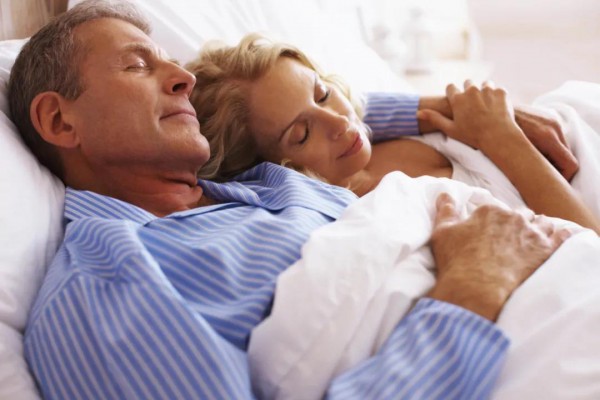
For many middle-aged and elderly people, sleep quality tends to decrease with age. Snoring, suffocation, light sleep and other conditions occur from time to time, and they may even face the risk of "sleep apnea syndrome", which not only affects sleep quality but may also bring about reduced energy, weakened memory and other conditions.
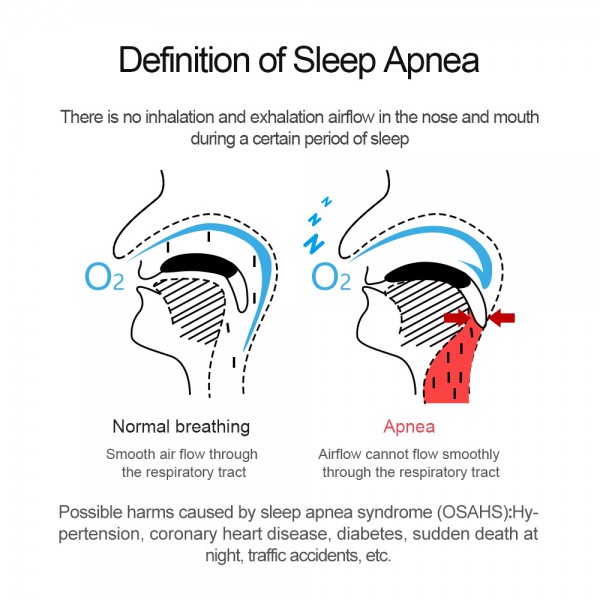
There is no inhalation and exhalation airflow in the nose and mouth duting a certain period of sleep.
When the percentage of oxygen saturation falls below 94%, that is called a desaturation. If the total number of desaturations divided by the total time is 5 or more desaturations per hour, then that is considered mild sleep apnea.
Apnea events can cause small arousals and even full awakenings during sleep. Apnea events can cause oxygen levels in the blood to drop below normal levels.
Many patients suffering from obstructive sleep apnea (OSA) have intermittent oxygen desaturation associated with periods of apnea or hypopnea. Oxygen saturation levels below 90% are considered harmful. Usually, treatment is directed at correcting the apnea, which will in turn prevent hypoxemia.
Obstructive sleep apnea is classified by severity: Severe obstructive sleep apnea means that your AHI is greater than 30 (more than 30 episodes per hour) Moderate obstructive sleep apnea means that your AHI is between 15 and 30. Mild obstructive sleep apnea means that your AHI is between 5 and 15.
In adults, the most common cause of obstructive sleep apnea is excess weight and obesity, which is associated with the soft tissue of the mouth and throat. During sleep, when throat and tongue muscles are more relaxed, this soft tissue can cause the airway to become blocked.
In the sleep environment at night, blood oxygen saturation can directly reflect the oxygen status of the body. It is suggested that you can keep a pulse oximeter at home, which can monitor sleep blood oxygen anytime and anywhere, and save money and effort than going to the hospital for blood oxygen testing.
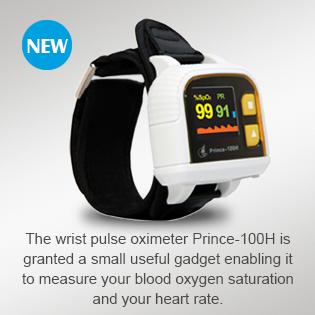
In order to realize the blood oxygen detection in the sleep environment, and at the same time have the smallest possible impact on the wearer’s sleep status, Heal Force launched the wrist-type Pulse Oximeter Prince-100G, which is comfortable to wear, lightweight and portable, Heal Force Pulse Oximeter Prince-100G is suitable for middle-aged and elderly people or for snoring people,assisting in the detection of sleep blood oxygen status.

Pluse Oximeter Prince-100G is a wrist home sleep monitor. Through sleep monitoring and analysis, it gives us early warning of possible health diseases. The oximeter can display respiration rate, blood oxygen, pulse rate, blood perfusion, pulse volume waveform, pulse intensity histogram. And it can also generate relative sleep report. Simple and easy, it can use the sleep monitoring APP.
Wrist-wear design, exquisite and comfortable
Pulse blood oxygen data is clear at a glance when raising your wrist.

9 major functions for comprehensive monitoring ensures night sleep

Keep track of sleep blood oxygen records anytime, anywhere

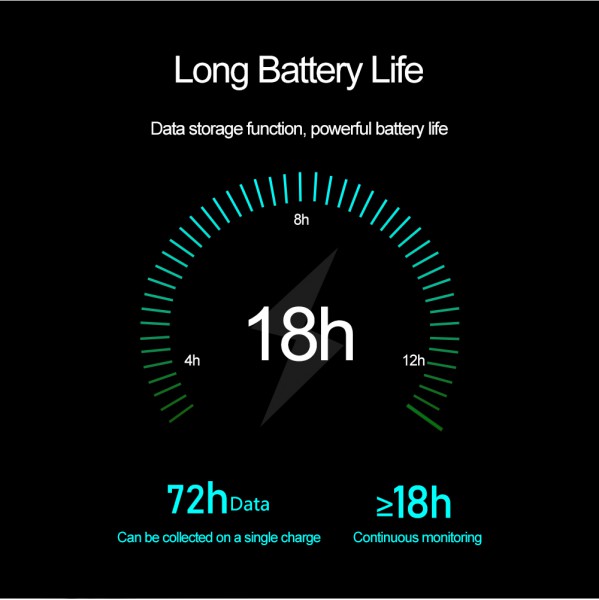
Long-lasting battery life and large charge, massive data storage
Automatic switch machine
Convenient operation to help family health management

As one of the important health indicators of our body, blood oxygen saturation can feed back on the respiratory health during sleep. It is reminded that if the blood oxygen level is low, it is easy to cause symptoms such as fatigue, sleepiness, inattention, and memory loss. Therefore, if you often feel chest tightness, fatigue, and breathing difficulty, you should pay attention to whether there is a problem with blood oxygen and timely test blood oxygen or seek medical advice!
 沪公网安备31011802003750号